Mold Removal in Lower Garden District, LA
The Lower Garden District runs from the expressway to Jackson Avenue on the river’s high ground, and it stayed dry in 2005. It is some of the oldest housing in the city — Greek Revival townhouses, raised cottages, and shotguns from the 1830s onward — much of it divided into apartments and condos, recently renovated with central air and new bathrooms.
We take mold calls from Lower Garden District at any hour. Tell us what you’re seeing and what got it wet.
Where it shows up in Lower Garden District
Calls here are mostly about old buildings with new systems: an attic air handler sweating over plaster ceilings, which is attic mold remediation or HVAC and duct mold remediation, and bathrooms with no exhaust in a house with fourteen-foot ceilings, bathroom mold removal. Tenants call us as often as owners here.
Call Us Now For Peace Of Mind
If we can pick up, you’re connected right then; if we’re mid-job you get a callback time and the number it will come from. Removal only — we don’t test.
Call and tell us where the smell is strongest.
Services Available in Lower Garden District
Attic Mold Remediation
Dark staining on the roof deck above a bathroom fan, a sweating air handler, or the leak that opened up in the last storm. Cleaned in place with the attic sealed off from the rooms below.
Bathroom Mold Removal
The ceiling over the tub, the wall behind the toilet, the floor of the vanity cabinet. Small rooms that never dry out in New Orleans, and removal that holds once the water is under control.
HVAC and Duct Mold Remediation
A musty blast every time the air conditioning starts. Growth at the coil, in the plenum, or in sweating insulated duct — cleaned or replaced so the system stops moving it through the house.
Crawl Space Mold Remediation
Shotguns, doubles, and raised cottages on piers hold damp air and standing water under the floor. Joists and subfloor cleaned, wet insulation out, and the space set up to stay drier.
Mold Odor Removal
A room that smells like a wet box and looks fine. Finding the growth that makes the smell and taking it out, instead of covering it with a spray.
Mold Removal
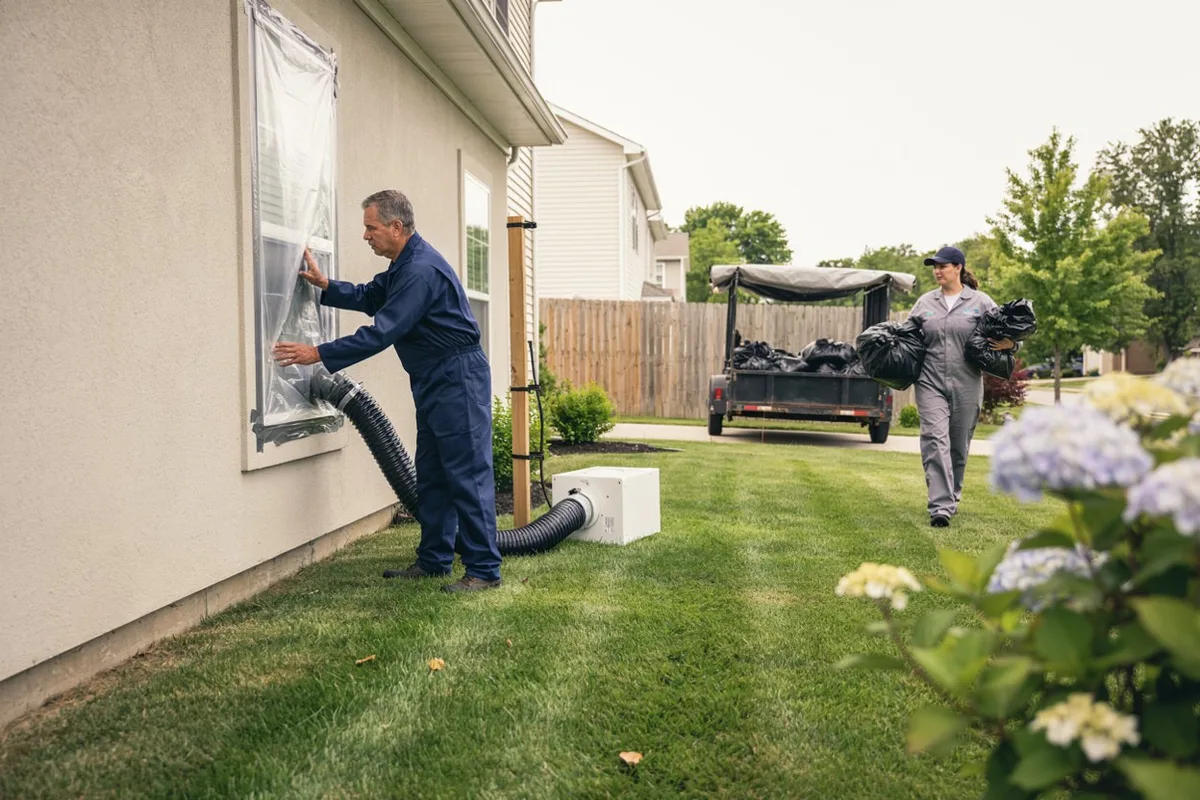
Work area sealed and under negative pressure, the wet drywall, trim, and insulation out, the framing cleaned and dried before anything gets closed back up.
Black Mold Removal
Dark, slimy, or greenish-black growth on drywall, ceilings, or baseboards. The color doesn’t change what we do; what got it wet does.
Whole-Home Mold Remediation
Growth through several rooms after floodwater, a roof that leaked all summer, or a house that sat shut with the power off. Room-by-room containment and removal on one plan.