How We Take Mold Out Of A New Orleans House, Step By Step
| What we do |
What it means for you |
| Seal the affected area in plastic and run it under negative pressure |
The rest of the house stays out of it — spores don’t follow us down the hall |
| Take out wet drywall, insulation, carpet pad, ceiling tile, and trim; clean framing, brick, and slab in place |
What can’t be saved leaves; the structure stays and gets cleaned |
| Bag every piece of removed material inside the containment before it goes out the door |
Nothing moldy is carried open through the kitchen or the front room |
| HEPA-vacuum and wipe down every cleaned surface, then let the framing dry before anything is closed |
No fresh drywall goes up over a wet stud |
| Find where the water came from and tell you what has to change |
If the moisture isn’t stopped, the removal won’t hold — and we say so before we start |
| Hand you a written report of what came out, from where, and why |
Louisiana law requires it, and it’s the document a buyer or an adjuster will ask to see |
Why The Same Ceiling Seam Keeps Growing Mold Back
Recurring mold is information. A patch that returns on the same ceiling seam, the same baseboard, or the same corner of the closet every few months is telling you the moisture never left — or the growth was inside the material and only the surface got cleaned. Scrubbing can make a wall look fine for a few weeks. Paint can make it look fine for a few months. Neither one touches the wet drywall behind it.
EPA does not recommend bleach as a routine practice for mold, and it says plainly not to paint or caulk over it. Porous materials that have been wet and moldy — drywall, insulation, carpet pad, ceiling tile — generally have to come out. Dead mold is still an allergen, so killing it isn’t the job. Removing it is.
Shotgun, Slab Ranch, Or Rebuild: What Got Wet In Yours?
That is the first question on every call, because New Orleans houses get wet in very different ways. The shotguns, camelbacks, and doubles on piers in Uptown, the Irish Channel, the Bywater, and the Seventh Ward carry a hundred-plus years of roof and plumbing repairs over a crawl space that never sees the sun; there, the smell usually comes up through the floor. The slab ranches built out in Lakeview, Gentilly, and New Orleans East from the 1950s on took the levee-breach water in 2005 and were rebuilt fast; there, the trouble is often a baseboard that softens or a cut line that never fully dried. And the houses that were gutted to the studs and re-sheeted after the storm are tight enough now that a small leak has nowhere to go.
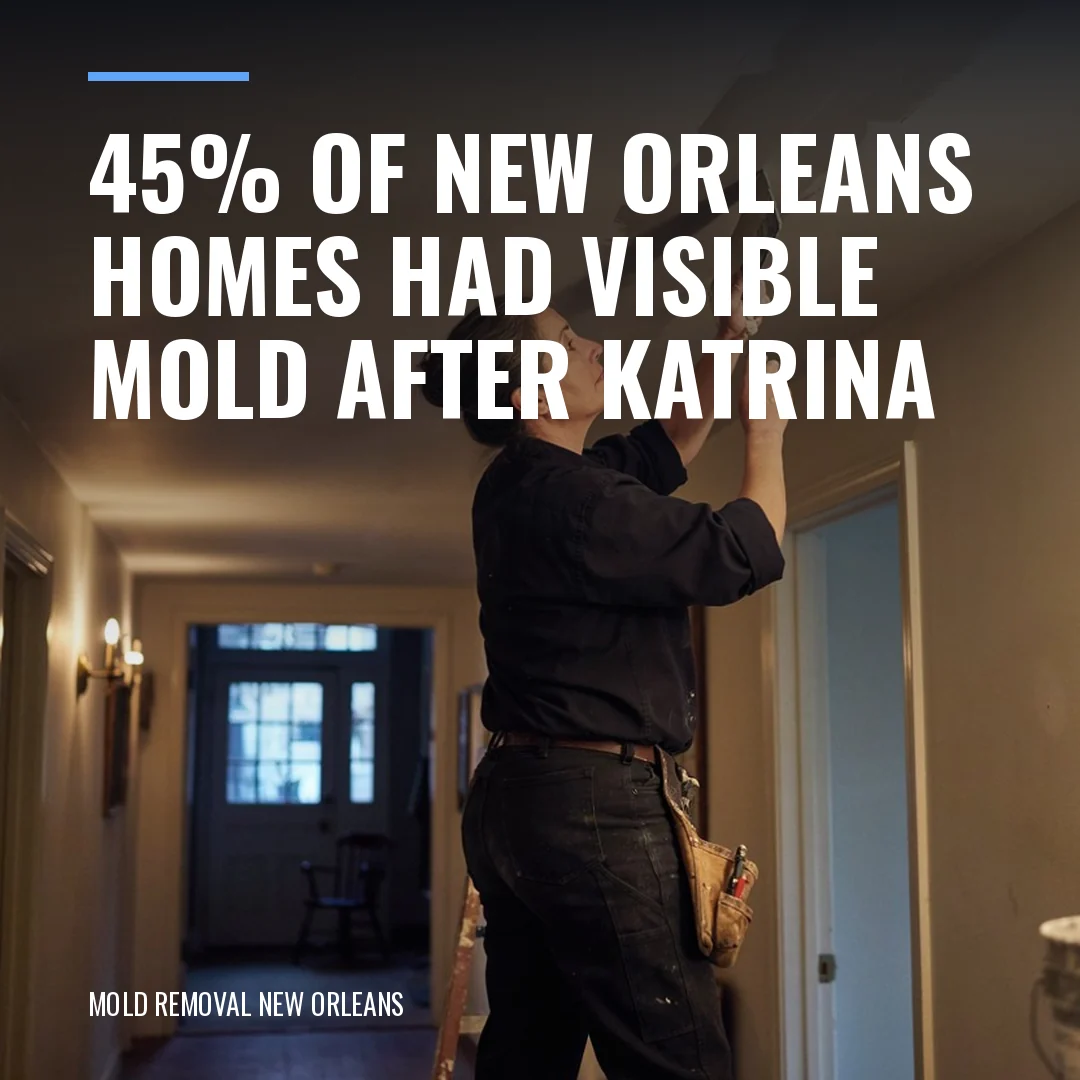
Then there’s the old growth. Katrina flooded roughly 80 percent of the city, and a lot of houses were dried “well enough” and closed back up because people needed to be home. Old house or new condo, moisture still wins: if a room has never smelled right since 2005, or since Ida, that is worth a call.
Why The Air Smells Musty For Ten Minutes After The AC Starts
New Orleans runs the air conditioning nearly year-round, and humidity never really takes the season off. Cold air moving through a duct in a hot attic sweats, and wet insulated duct is exactly what mold wants. The tell is a musty smell that arrives with the airflow and fades when the system cycles off, or one supply vent that always carries a dark ring. EPA says not to run a system you suspect is contaminated, because it can spread mold through the whole building, and that wet or moldy insulated duct can’t be effectively cleaned — it gets replaced. Louisiana’s Department of Health repeated the same advice after Ida. For a walk-through of that work, see HVAC and duct mold remediation.
Bought A House That Was Gutted After Katrina?
A large share of the city’s housing was gutted and re-sheeted after 2005, and a lot of it was closed back up before the framing had dried, because people needed to get home. Twenty years on, those houses change hands, and the new owner is the one who notices: a line of growth returning at the same baseboard, a closet that never lost its smell, a wall that feels cool on a hot day. If you bought a house that was rebuilt after the storm and something in it has never seemed right, call and tell us what you see. That history is exactly what we ask about first.
Selling A New Orleans House With A Flood Story?
Louisiana’s required property disclosure form asks sellers directly about mold, water intrusion, and flooding — and in New Orleans, most houses have a flood story. A known problem that isn’t disclosed can come back after closing as a rescission or damages claim. A problem that was removed and documented is one line on the form and one report in the file. Buyers here can also pull claim histories that show water damage on their own, so the quieter path is rarely the safer one.
Call Us Now — We Cover Every Neighborhood In Orleans Parish
We answer at any hour. Tell us where the growth or the smell is, what got wet, and whether you’ve cleaned or painted it before. If we can pick up, you’re connected right then; if we’re mid-job you get a callback time and the number it will come from.
We take calls from Uptown, Lakeview, Gentilly, Mid-City, Algiers, New Orleans East, the Bywater and Marigny, Broadmoor, Carrollton, the Garden District, Treme, and the rest of Orleans Parish. The full list of neighborhoods is on the areas page.
Ready to get it removed? Call.