HVAC and Duct Mold Remediation in New Orleans, LA
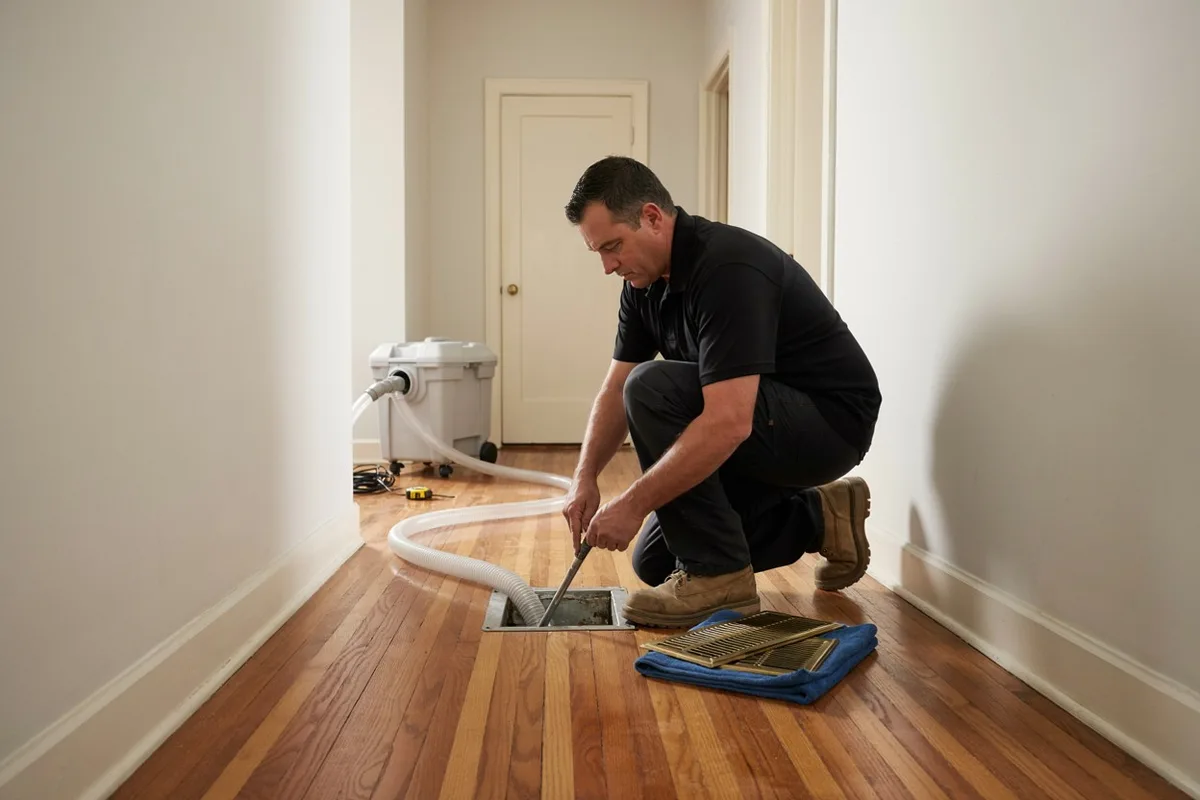
The house smells fine until the air conditioning kicks on, and then for ten minutes it smells like a wet closet. One supply register always has a dark ring around it no matter how many times you wipe the grille. The return filter comes out gray and damp. Call and tell us when the smell shows up — we handle HVAC and duct mold across New Orleans and Orleans Parish.
When Mold Reaches The HVAC
New Orleans runs the AC nearly year-round, so the system is always moving cold air through a hot, humid attic. The cooling coil sweats; EPA calls condensation near the coil a major factor in moisture contamination of duct systems. Insulated flex duct sags, collects condensation, and stays wet. The platform under the air handler soaks up an overflowing drain pan. Any of those puts growth directly in the airstream, and EPA says running a system you suspect is contaminated can spread mold throughout the building.
What gets cleaned and what gets replaced
- Bare sheet-metal duct, the coil, the plenum, and the air handler cabinet get cleaned in place.
- Wet or moldy insulated duct and duct board can’t be effectively cleaned — EPA and Louisiana’s Department of Health both say it gets replaced.
- The smell often arrives before any visible growth does, because the mold is inside the duct rather than in the room.
- A stained ceiling tile or register usually reveals a problem that started above it, in the attic run.
Tell Us Where You Smell It, 24/7
What to do now
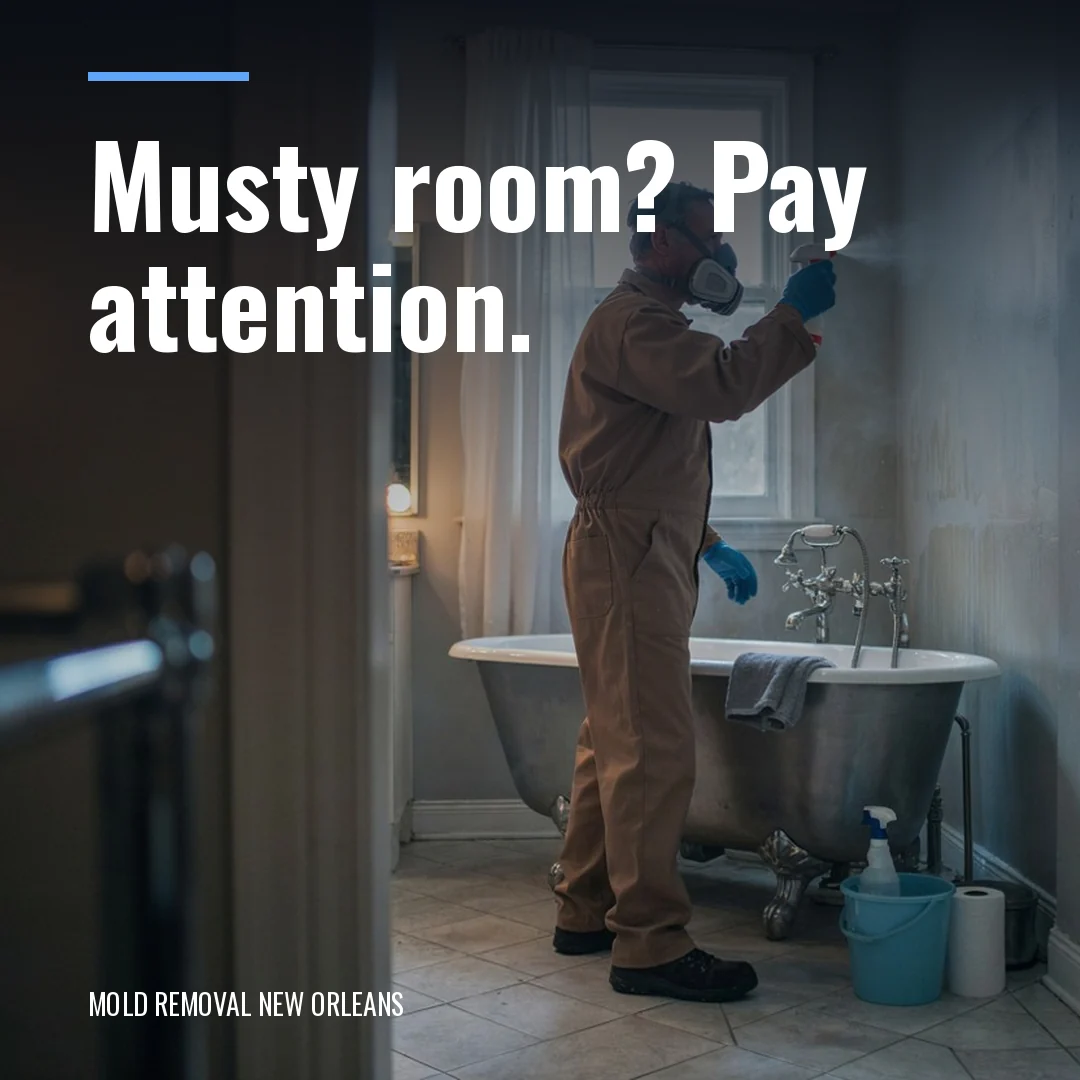
If the musty smell is clearly tied to the system running, turn it off and leave it off until we’ve looked. Don’t spray anything into a register. Note whether the smell is in every room or only the ones on one duct run — that tells us where to start. If the growth turns out to be on the ceiling or wall around a vent instead of inside the duct, that is ordinary mold removal, and we say so.